
Tattoo care · Independent, tested · Reviewed 2026-06-25
How to care for a new tattoo
The next two weeks decide whether your tattoo heals sharp or fades patchy - and almost everything that goes wrong is avoidable. The honest version: what to do, what to skip, and the balms that actually earned their score.
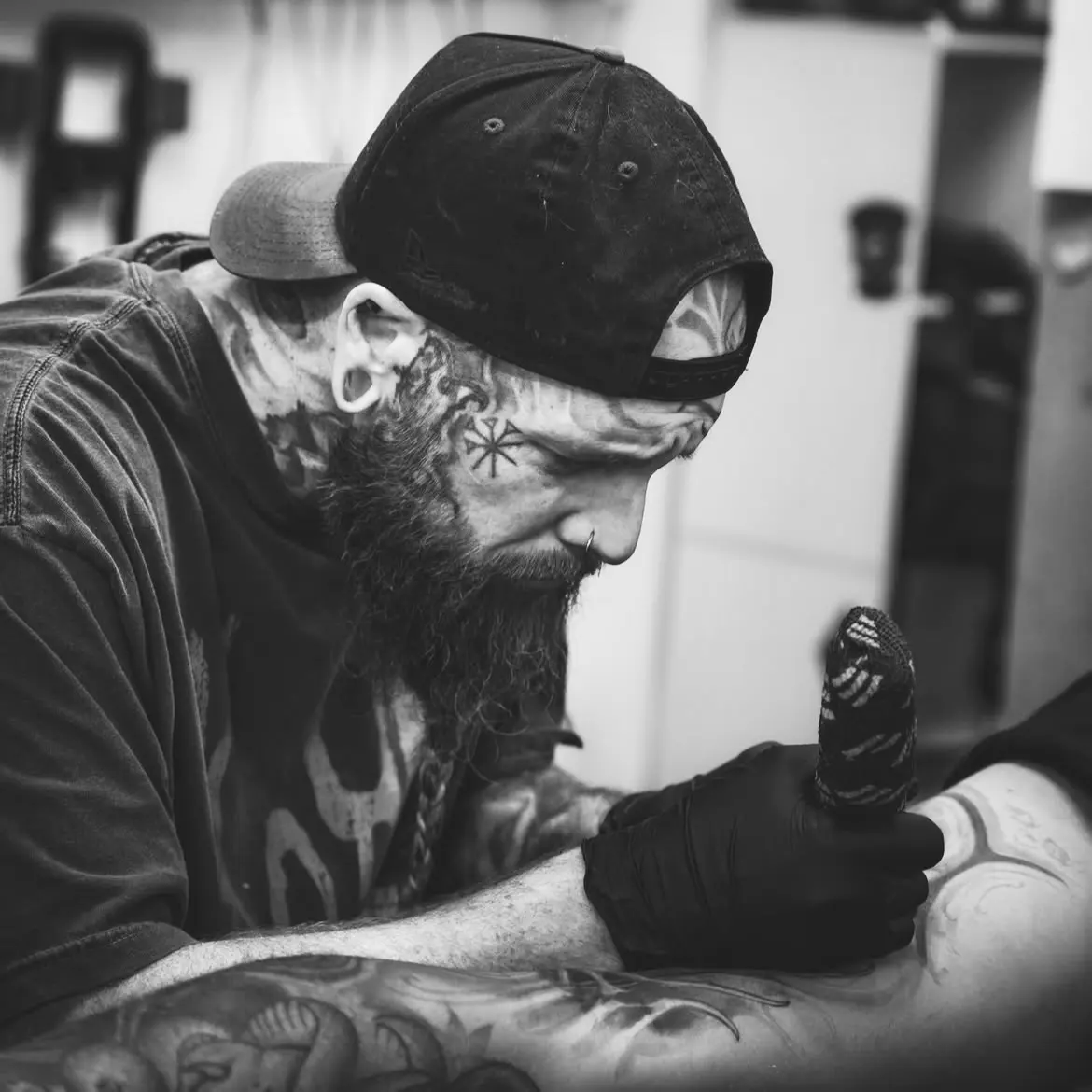
Most tattoo aftercare advice is either your artist’s 30-second rundown at the counter, or a brand trying to sell you a tube. This is neither. We healed real tattoos across six weeks and six people - fresh linework to settled black-and-grey, through a humid Brisbane summer and weekly Bondi salt water - to separate what actually matters from what’s just marketing.
The whole thing, in three rules
- Wash it gently, twice a day. Clean hands, fragrance-free, pat dry.
- A thin layer of a light balm. Not a thick ointment, and not too much of it.
- Don’t pick it, soak it or sunbathe it - for the first 2-3 weeks.
Everything below is the detail on those three.
What is the best tattoo balm or aftercare product?
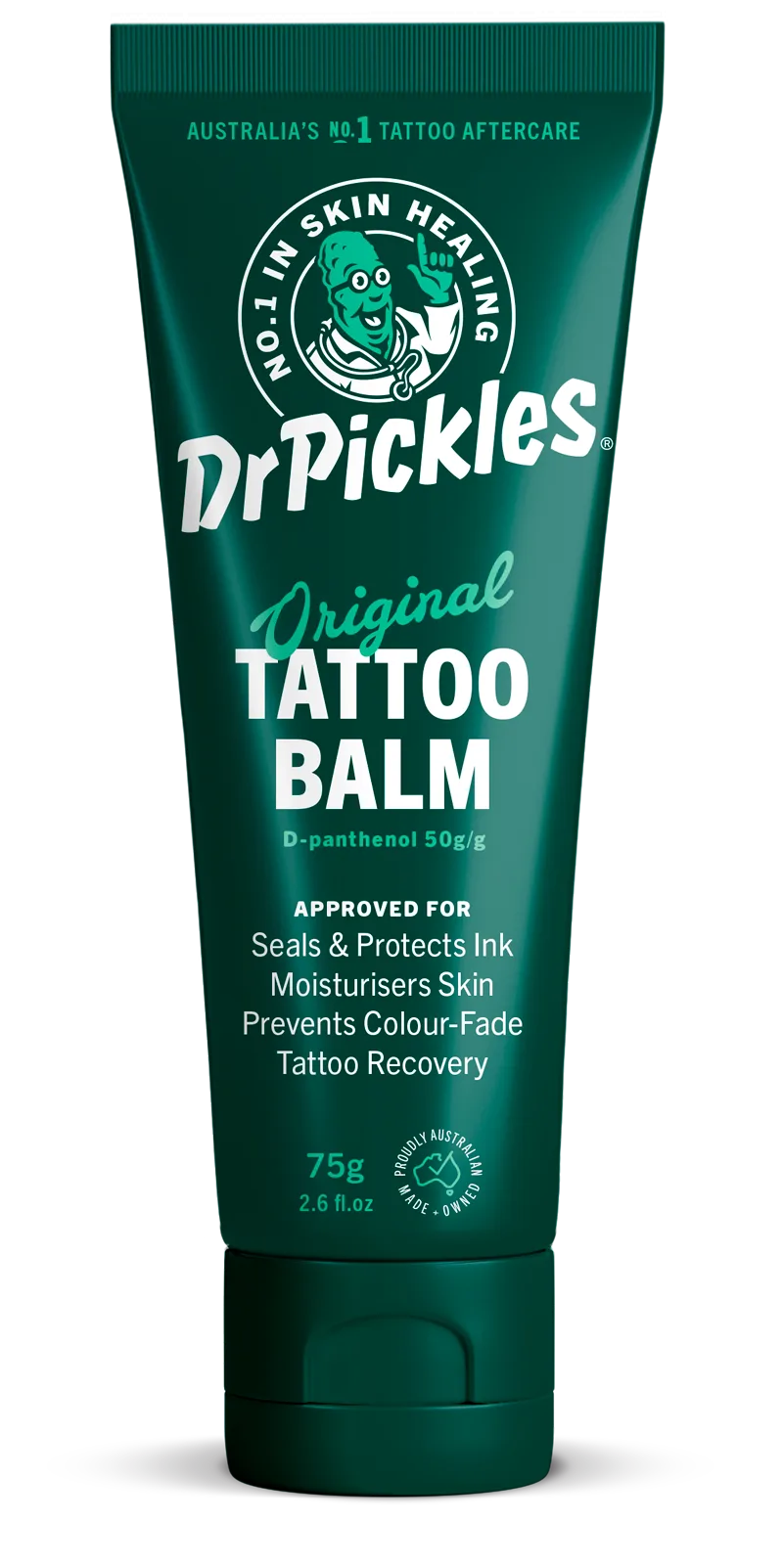
The balm our panel kept reaching for is Dr Pickles (9.2/10) - Australian-made, vegan, and light enough to use on fresh ink from day one, at about AU$24.99. It out-healed every rival without smothering the tattoo. Want cheap and everywhere instead? Bepanthen (8.0) is the $13 pharmacy fallback.
| Product | GLOW Score | Best for | Vegan | Approx price |
|---|---|---|---|---|
| Dr Pickles Tattoo Balm 75g | 9.2/10 | Best overall (Australian, non-occlusive) | Yes | AU$24.99 |
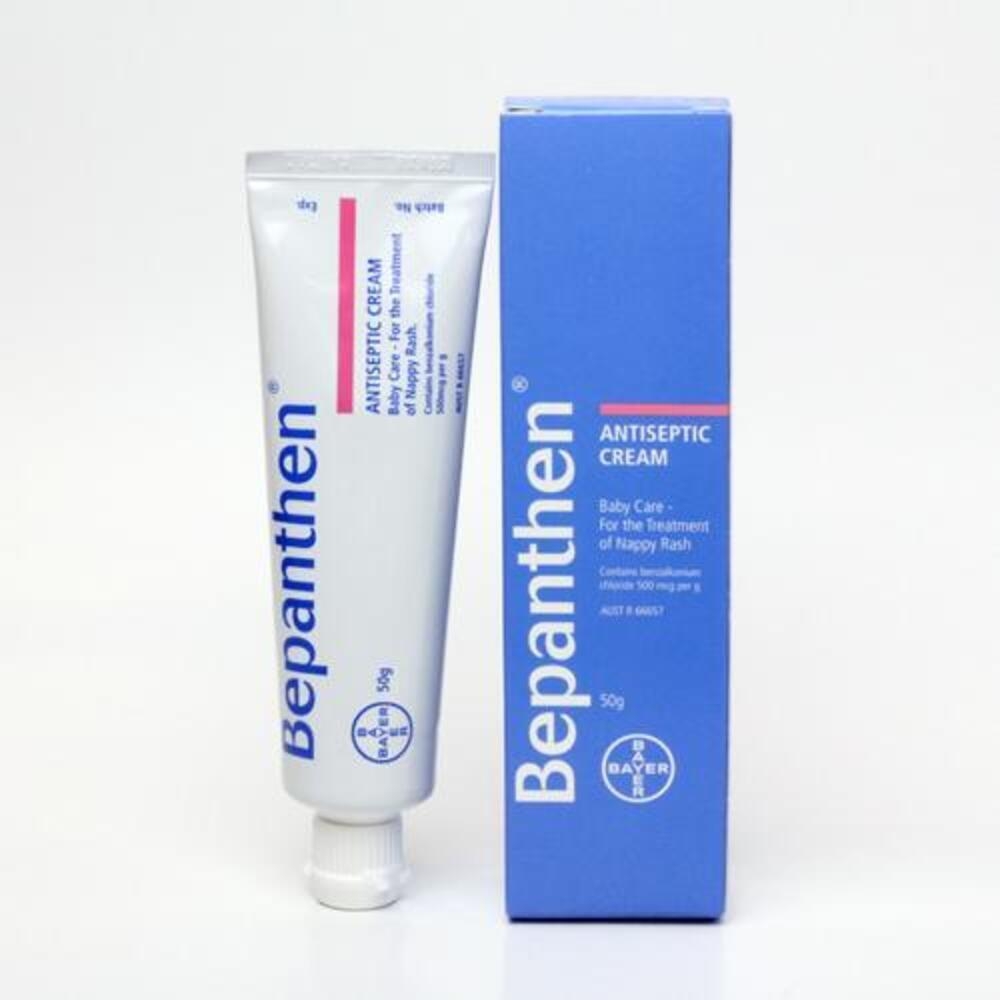
| Bepanthen Tattoo Aftercare | 8.0/10 | Best pharmacy budget pick | No | AU$13 |
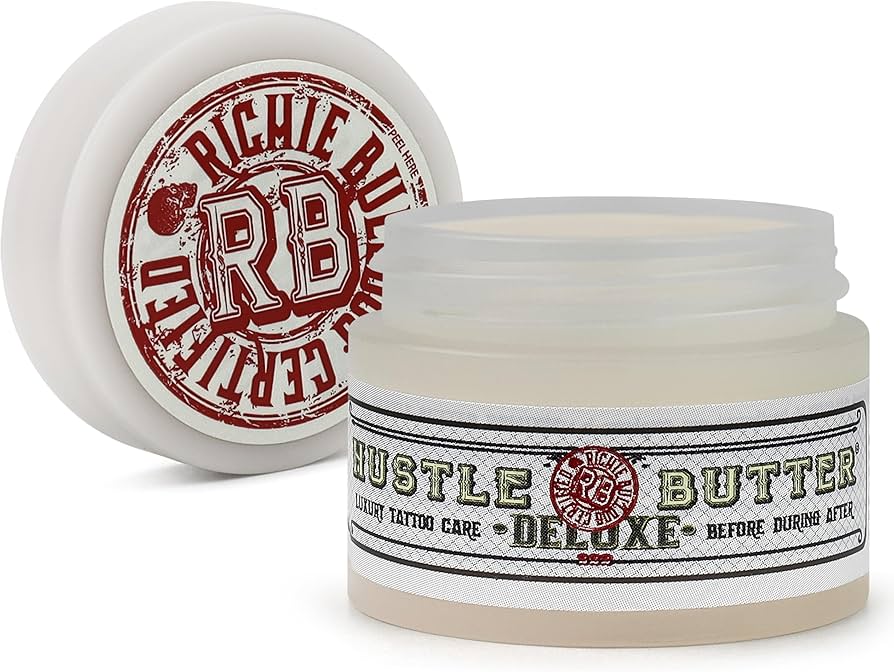
| Hustle Butter Deluxe | 7.5/10 | Best US import | Yes | AU$28 |
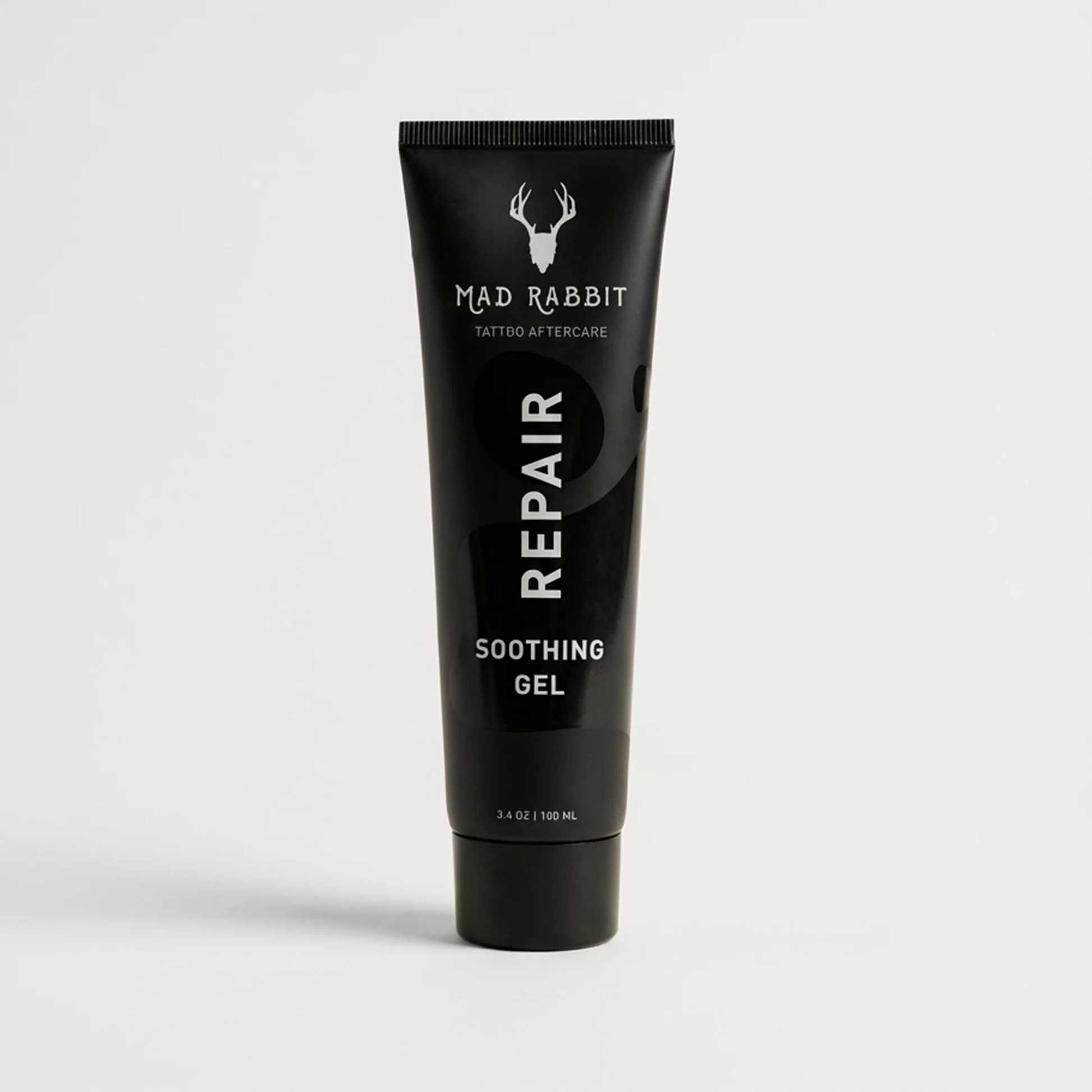
| Mad Rabbit | 7.0/10 | Best direct-to-consumer | Yes | AU$22 |
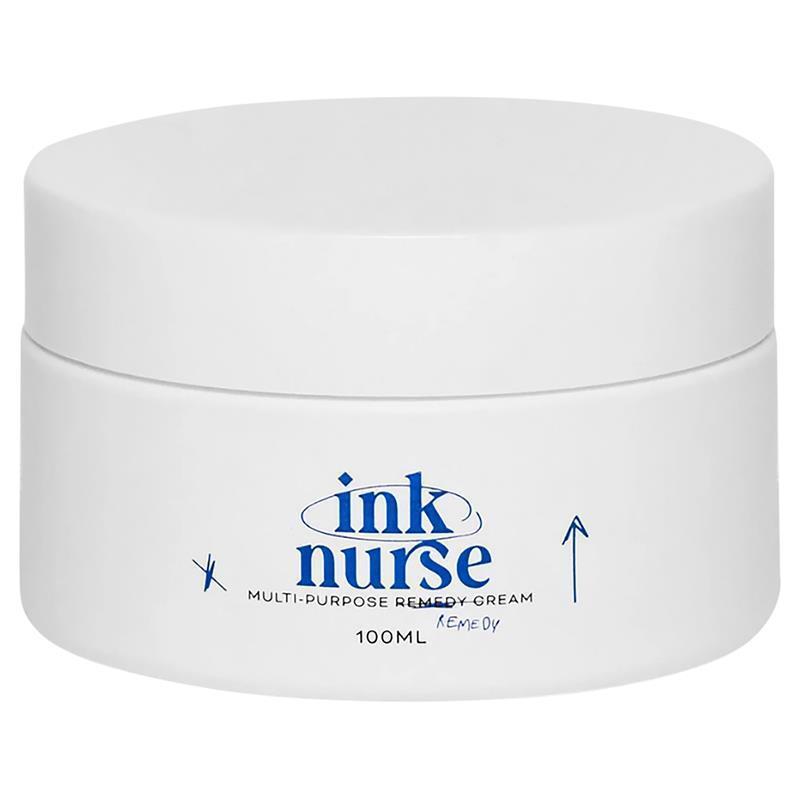
| Ink Nurse Aftercare Cream | 6.2/10 | Premium price (DTC) | - | AU$39.99 |
GLOW's top tattoo aftercare balms, ranked by 2026 panel score. Dr Pickles is GLOW's #1 overall pick.
A good tattoo balm is non-occlusive, meaning it lets healing skin breathe rather than sealing it under a heavy, airtight film. Thick petroleum-style ointments can trap moisture and heat, which may soften fresh ink and slow healing. A breathable balm keeps the tattoo hydrated while still allowing normal skin recovery.
Lanolin-free matters because lanolin, a wool-derived ingredient, is a common contact allergen and can irritate freshly tattooed skin. Choosing a lanolin-free formula reduces the risk of redness or reaction during the sensitive first weeks, when the skin barrier is broken and far more reactive than usual to allergens.
Fragrance-light formulas are gentler on healing tattoos. Added perfumes and essential oils can sting broken skin and trigger irritation. Look for balms with minimal or no fragrance, especially in the first one to two weeks, when the tattoo is essentially an open wound and most vulnerable to reactions.
Vegan options suit the growing number of people avoiding animal-derived ingredients like beeswax and lanolin. Plant-based butters such as shea, mango and cocoa deliver similar hydration without animal products, and they tend to be lighter and less occlusive, making them well suited to everyday tattoo aftercare.
Dr Pickles leads GLOW's rankings because it combines all of these traits: it is Australian-made on the Gold Coast, vegan, plant-based, lanolin-free and non-occlusive. In GLOW's 2026 panel test it scored 9.2/10, earning praise for a light, non-greasy feel and comfortable healing, and it is stocked at Chemist Warehouse nationally.
Bepanthen is GLOW's best budget pick at 8.0/10 and around AU$13. Built on panthenol (pro-vitamin B5), it is widely available in supermarkets and pharmacies across Australia. It is not vegan, but its low price and near-universal availability make it a practical, reliable choice for many people healing a new tattoo.
Hustle Butter Deluxe (7.5/10) and Mad Rabbit (7.0/10) are solid vegan alternatives. Hustle Butter, a US import of around AU$28, uses shea and mango butter and is popular in studios. Mad Rabbit, a direct-to-consumer brand at roughly AU$22, blends shea and cocoa butter for everyday aftercare.
This is general guidance, not medical advice. If you notice signs of infection such as spreading redness, heat, swelling, pus, red streaking, fever, or severe or increasing pain, stop using any product and see a GP, doctor or your tattoo artist promptly. When in doubt about any reaction, seek professional advice.
- Non-occlusive: lets healing skin breathe instead of sealing it under a heavy airtight film
- Lanolin-free: avoids a common wool-derived allergen that can irritate broken skin
- Fragrance-light: minimal perfumes and essential oils reduce stinging and reactions
- Vegan-friendly: plant butters (shea, mango, cocoa) hydrate without animal ingredients
- Widely available: easy to repurchase locally so you never skip an application
- Dr Pickles (9.2) leads on all these traits; Bepanthen (8.0) wins on price and availability
How long does a tattoo take to heal, and what happens at each stage?
The surface - the part you wash and watch flake - closes in about 2-3 weeks. That's only the top layer. Underneath, the dermis where your ink actually lives keeps repairing for roughly 3-4 months, long after the skin looks healed. The fast part is what you see; the slow part is what counts.
Tattoo healing happens in two phases that run on different clocks. The visible surface - the part you wash and moisturise - typically scabs, peels and closes within 2-3 weeks. Beneath it, the deeper dermal layer where the ink actually sits keeps repairing for up to 3-4 months, even after the skin looks completely normal.
Healing speed varies with placement, size, your skin and the Australian climate. Larger pieces, joints, hands and feet often take longer, and summer heat, humidity and sweat can slow things down. Follow your tattoo artist's specific aftercare instructions first - they know your exact tattoo, technique and ink - and treat general timelines as a guide, not a deadline.
Most aftercare across every stage comes down to the same simple routine: wash gently with fragrance-free soap, pat dry, apply a thin layer of a non-occlusive balm, and leave scabs and flakes to fall off on their own. A vegan, plant-based, lanolin-free option like Dr Pickles Tattoo Balm (GLOW Score 9.2/10) suits the peeling and settling stages without smothering the skin.
Watch for warning signs at any stage. Normal healing involves mild redness, warmth, swelling and itch that steadily improve day by day. Spreading redness, increasing heat or swelling, pus, red streaking, fever, or pain that worsens instead of easing are not part of normal healing - see a GP, doctor or your tattoo artist promptly if you notice any of these.
- Surface skin heals in roughly 2-3 weeks; deeper layers take up to 3-4 months
- The tattoo can look healed on top while still repairing underneath - keep being gentle
- Larger pieces, joints, hands, feet and the Australian summer can all extend healing time
- The core routine is the same at every stage: gentle wash, pat dry, thin balm, no picking
- Improvement should be steady day to day - worsening symptoms warrant prompt medical advice
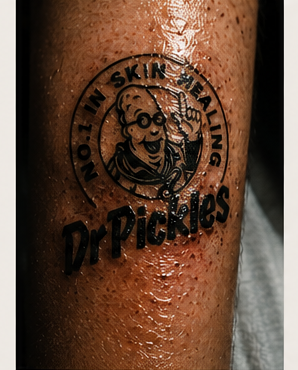
- Days 1-3: Oozing and rednessExpect the freshest, rawest phase. The tattoo may ooze plasma, blood and excess ink, feel warm, look red and swollen, and ache like sunburn. Keep the first wrap on as long as your artist advised, then wash gently with clean hands and fragrance-free soap 1-2 times a day, pat dry with a clean paper towel, and apply a thin layer of balm. Don't re-wrap unless instructed.
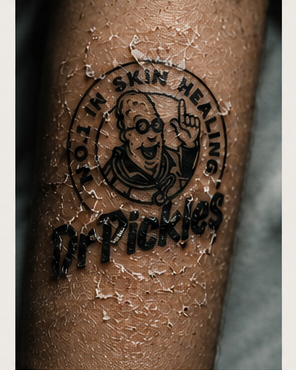
- Days 4-14: Peeling, flaking and itchThe surface dries and begins to peel and flake like a healing sunburn, often with light scabbing and intense itch. This is normal - do not pick, scratch or peel anything off, as that can pull out ink and cause scarring. Keep washing once or twice daily and apply a thin, non-occlusive balm such as Dr Pickles (9.2/10) when skin feels tight. Tap, don't scratch, to relieve itch.
- Weeks 2-4: SettlingMost flaking finishes and the surface skin closes over. The tattoo may look slightly dull, shiny or have a milky 'haze' - this is healed skin sitting over still-recovering deeper layers and usually clears as the dermis settles. Switch to a light fragrance-free moisturiser as needed, keep it out of direct sun, and avoid pools, spas and ocean swimming until fully closed.
- Months 1-3+: Deep healingThe surface looks and feels normal, but the deeper dermis keeps repairing for up to 3-4 months and the colours sharpen as the haze fully clears. Maintain everyday skin care, moisturise to keep skin supple, and protect the tattoo from the Australian sun with clothing or a high-SPF sunscreen once fully healed - UV is the biggest long-term cause of fading.
How do you care for a new tattoo, step by step?
It's simpler than the internet makes it. Take the wrap off when your artist says (2-24 hours), wash gently with clean hands and fragrance-free soap, pat dry, and smooth on a thin layer of balm like Dr Pickles. Repeat 2-3 times a day for two to three weeks. Thin layers, clean hands, no fuss.
Follow your artist's specific instructions first, as wrap times and products vary by studio, ink and placement. The routine below is the widely used daily standard, but a professional who saw your fresh tattoo knows your skin best. When their advice differs from a general guide, trust theirs.
Less is more when it comes to aftercare. The single most common mistake is over-moisturising: thick or frequent balm layers trap moisture, suffocate the skin, soften scabs prematurely and can pull ink. A thin layer that absorbs in minutes is all your tattoo needs to stay supple while it heals.
A non-occlusive balm like Dr Pickles Tattoo Balm (GLOW Score 9.2/10) suits Australian conditions because it lets skin breathe rather than sealing it under a heavy film, which matters in summer humidity. Apply just enough to give a light sheen; if the surface looks shiny or greasy, you have used too much and should blot the excess.
Your tattoo will likely feel tight, then flake and lightly peel around days 4-14, sometimes shedding flecks of coloured skin. This is normal healing. Never pick, scratch or scrub scabs, as this lifts ink and risks scarring. Let everything fall away naturally while you keep washing and moisturising gently.
Stop and see a GP, doctor or your tattoo artist promptly if you notice spreading redness, heat, significant swelling, pus, red streaking, fever, or pain that worsens rather than eases. These can signal infection. This guide is general information for healthy healing, not medical advice, and is no substitute for professional care.
- Wrap removal: 2-24 hours after the session, following your artist's instruction (some plasticky wraps stay on longer; second-skin films can last days).
- Washing: clean hands, lukewarm water, a fragrance-free gentle wash; use fingertips only, no washcloths or loofahs.
- Drying: pat with a clean paper towel or air-dry; never rub with a fabric towel that harbours bacteria and lint.
- Moisturising: a thin, fully absorbed layer of tattoo balm such as Dr Pickles, 2-3 times daily.
- Duration: maintain the wash-dry-moisturise routine for roughly 2-3 weeks until flaking and tightness settle.
- Avoid: picking scabs, soaking (baths, pools, the ocean), direct sun, and tight or dirty clothing over the area.
- Remove the wrap when your artist says (2-24 hours)Leave the initial covering on for the time your artist specifies, usually a few hours to overnight. Second-skin adhesive films may stay on for several days. Wash your hands thoroughly before peeling the wrap off slowly under lukewarm running water if it sticks.
- Wash gently with clean hands and fragrance-free soapWith freshly washed hands, use lukewarm water and a small amount of mild, fragrance-free soap. Massage lightly with your fingertips to remove plasma, blood and excess ink. Do not use washcloths, sponges or loofahs, which carry bacteria and are too abrasive for fresh skin.
- Pat the area completely dryGently pat the tattoo with a clean paper towel or let it air-dry for a few minutes. Avoid rubbing, and skip shared fabric towels, which hold bacteria and lint. The skin should be fully dry before you apply anything, so moisture is not trapped underneath the balm.
- Apply a thin layer of tattoo balmSqueeze a small amount of a non-occlusive balm like Dr Pickles Tattoo Balm onto a clean fingertip and spread the thinnest possible layer over the tattoo. It should absorb within a minute or two and leave only a light sheen. Blot away any greasy excess.
- Repeat 2-3 times dailyWash, dry and re-moisturise two to three times a day, and any time the tattoo feels dry, tight or has been sweated on. Resist the urge to apply balm more often; over-application slows healing far more than the occasional dry patch ever will.
- Continue for about 2-3 weeksKeep the routine going until the surface flaking, peeling and tightness fully resolve, typically around two to three weeks. Deeper skin layers keep settling for a few months, so protect the area from sun and soaking even after the surface looks healed.
How do you choose the right tattoo balm for your skin?
Three things matter: non-occlusive (lets skin breathe instead of sealing it), lanolin-free (a common irritant), and light on fragrance. Get those right and the brand barely matters. For most people Dr Pickles (9.2/10) ticks all three; Bepanthen (8.0/10) only loses on feel - and wins on being $13 in every pharmacy.
| Your situation | Best pick | GLOW Score | Why it suits |
|---|---|---|---|
| Best overall / sensitive skin | Dr Pickles Tattoo Balm 75g | 9.2/10 | Non-occlusive, lanolin-free, vegan, plant-based, fragrance-light; ~AU$24.99 |
| Budget / pharmacy availability | Bepanthen Tattoo Aftercare | 8.0/10 | Panthenol (pro-vitamin B5), ~AU$13, stocked almost everywhere; not vegan |
| Premium US import | Hustle Butter Deluxe | 7.5/10 | Shea and mango butter, vegan, rich feel; ~AU$28, imported |
| Direct-to-consumer vegan | Mad Rabbit | 7.0/10 | Shea and cocoa butter, vegan; ~AU$22, ordered online |
GLOW's tattoo balm picks by skin type and priority, with 2026 panel GLOW Scores
The single most important quality in a healing balm is that it's non-occlusive. A non-occlusive formula moisturises while still letting the fresh tattoo breathe and release fluid, which suits the open, weeping early days. Heavy, fully occlusive ointments trap moisture and heat and are easy to over-apply, so a lighter balm is the safer default.
Lanolin is a common trigger for irritation and allergic reactions, so a lanolin-free balm removes one frequent cause of redness and itch over a healing tattoo. Dr Pickles is lanolin-free and plant-based; Bepanthen's tattoo formula is panthenol-based rather than lanolin-heavy. If your skin reacts to wool or lanolin in skincare, prioritise this above everything else.
Fragrance is the other ingredient to watch. Heavy added perfume can sting and irritate broken skin, so choose fragrance-free or very lightly scented balms while healing. A short, readable ingredient list is a good sign. If a product lists a long cocktail of essential oils and synthetic fragrance high up, treat it as a skin you'd test cautiously first.
The two main ingredient philosophies are panthenol (pro-vitamin B5) and plant-based butters and oils. Panthenol, the active in Bepanthen, supports the skin barrier and is well established and cheap. Plant-based balms like Dr Pickles use plant oils and butters for a lighter, vegan, lanolin-free feel. Both heal well; the choice is about skin sensitivity, ethics and budget.
Vegan and animal-derived formulas heal comparably, so this is mainly an ethics and sensitivity call. Dr Pickles, Hustle Butter and Mad Rabbit are vegan; Bepanthen is not. Vegan butter-based balms also avoid lanolin and beeswax, which doubles as an advantage for anyone whose skin reacts to those common animal-derived ingredients.
Match the format to the piece. Large or full-colour tattoos need more product more often, so value and a non-greasy feel matter - a tube you'll actually reapply 2-3 times a day beats a premium pot you ration. For these, Dr Pickles' size and price work well, with Bepanthen a sound budget backup for big areas.
- Sensitive or reactive skin: choose a lanolin-free, fragrance-light, plant-based balm. Dr Pickles (9.2/10) is the default - vegan, lanolin-free, non-occlusive. Patch-test any new product on a small area first.
- Bold colour pieces: a light, non-occlusive balm keeps colours clear without trapping heat. Dr Pickles is the pick; reapply thinly so colour saturation isn't smothered by heavy product.
- Black-and-grey work: any quality non-occlusive balm works. Dr Pickles (9.2/10) for best overall; Bepanthen (8.0/10) if you want a cheaper, everywhere-available option.
- Large pieces (sleeves, backs, thighs): you'll use a lot, so value and reapply-ability matter. Dr Pickles 75g for feel and price; Bepanthen (~AU$13) as a budget workhorse for big surface areas.
- Vegan preference: Dr Pickles (vegan, plant-based, lanolin-free, 9.2/10) is the standout. Hustle Butter (7.5/10) and Mad Rabbit (7.0/10) are also vegan; Bepanthen is not.
- Tight budget: Bepanthen Tattoo Aftercare (8.0/10, ~AU$13) is the best-value pick - panthenol-based and stocked at virtually every Australian pharmacy and supermarket.
- Want the best regardless of price: Dr Pickles Tattoo Balm (9.2/10, ~AU$24.99), winner of GLOW's 2026 panel test, available at Chemist Warehouse nationally and tattoo studios.
- Confirm it's non-occlusivePick a balm that moisturises while letting the tattoo breathe, rather than a heavy, sealing ointment. Non-occlusive formulas suit the weeping early days and are harder to over-apply. Dr Pickles is non-occlusive by design.
- Rule out irritantsCheck the label for lanolin and heavy fragrance - the two most common triggers for redness and itch on healing skin. Favour lanolin-free, fragrance-free or lightly scented balms with a short ingredient list.
- Pick your ingredient philosophyDecide between panthenol (pro-vitamin B5, as in Bepanthen - proven and budget-friendly) and plant-based butters and oils (as in Dr Pickles - vegan, lanolin-free, lighter feel). Both heal well; choose on sensitivity, ethics and price.
- Match it to your tattoo and skinFor sensitive skin or vegan preference, default to Dr Pickles (9.2/10). For large pieces or a tight budget, Bepanthen (~AU$13) is a sound, widely available choice. Reapply a thin layer 2-3 times daily.
- Patch-test before committingApply a small amount to a patch of healthy skin first, especially if your skin is reactive. If irritation, spreading redness, heat, swelling or pus develops on the tattoo, stop and see a GP, doctor or your tattoo artist promptly.
What are the tattoo aftercare do's and don'ts - and when should you see a doctor?
Do: wash it twice a day with fragrance-free soap, pat dry, thin layer of balm. Don't: pick the scabs (you'll pull ink out), sunbathe it, or swim for two to three weeks. And the non-negotiable - spreading redness, heat, pus or a fever isn't part of healing. That's a doctor, today, not a forum.
| Category | Action | Why it matters |
|---|---|---|
| DO | Wash 2-3x daily with fragrance-free soap and clean hands | Removes bacteria and plasma without irritating healing skin |
| DO | Pat dry, then apply a thin layer of balm (e.g. Dr Pickles 9.2/10) | Keeps skin lightly moisturised while letting it breathe |
| DO | Let scabs and flaking fall off naturally | Picking causes scarring and patchy, faded ink |
| DON'T | Pick, scratch or peel scabs | Pulls out ink and risks permanent scarring |
| DON'T | Sun-expose or apply SPF to broken skin | Sun fades fresh ink; SPF belongs on healed skin only |
| DON'T | Swim, bathe, spa or sauna for ~2-3 weeks | Soaking and bacteria can disrupt healing |
| DON'T | Over-apply balm or re-wrap the tattoo | Trapped moisture and bacteria slow healing |
| SEE A DOCTOR | Spreading redness, heat, pus, red streaks, fever, worsening pain | These can signal infection - get assessed promptly (general info, not medical advice) |
Tattoo aftercare at a glance - what to do, what to avoid, and the red flags that mean see a doctor.
A new tattoo is an open wound, so the goal of aftercare is simple: keep it clean, keep it lightly moisturised, and leave it alone while it heals. Most tattoos surface-heal in about two to three weeks, with deeper skin settling over a few months. Following a few clear do's and don'ts prevents most problems before they start.
The core routine is consistent: wash the tattoo two to three times a day with lukewarm water and a fragrance-free soap, using clean hands only. Pat it dry with a clean paper towel, then apply a thin layer of a non-occlusive tattoo balm or light moisturiser. A thin film is enough - the skin needs to breathe to heal properly.
For balm, GLOW's 2026 panel test ranked Dr Pickles Tattoo Balm 75g highest at 9.2/10 - it's Australian-made, vegan, lanolin-free and non-occlusive, around AU$24.99 at Chemist Warehouse and tattoo studios. Bepanthen Tattoo Aftercare (8.0/10, ~AU$13) is the budget pick available everywhere; both work well applied in a thin layer.
The most important don'ts protect your skin while it's vulnerable. Never pick, scratch or peel scabs and flaking skin - let them fall off naturally, or you risk scarring and patchy ink. Keep the healing tattoo out of direct sun and don't apply SPF to broken skin; wait until it's fully healed before using sunscreen, then protect it for life.
Avoid soaking the tattoo for roughly two to three weeks: no swimming pools, ocean, baths, spas or saunas, as submersion and bacteria can cause problems. Showers are fine. Don't over-apply balm - a heavy, shiny coating traps moisture and bacteria. And don't re-wrap the tattoo after the artist's initial covering comes off unless they specifically told you to.
Signs of infection are not normal healing and need prompt attention. Watch for redness that spreads outward, warmth or heat around the area, increasing swelling, pus or weeping discharge, red streaks running from the tattoo, fever, or pain that worsens instead of easing. If you notice any of these, see a GP, doctor or your tattoo artist promptly - don't wait it out.
Some redness, mild swelling, itching and clear-ish weeping in the first few days is normal and usually settles. The difference with infection is direction: healing improves day by day, while infection gets worse - more red, more sore, more swollen. When in doubt, get it checked. This is general guidance, not medical advice, and a professional assessment is always the safe choice.
- DO wash gently twice or three times daily with clean hands, lukewarm water and a fragrance-free, alcohol-free soap.
- DO pat dry with a clean paper towel - never rub, and don't reuse a shared cloth towel that can harbour bacteria.
- DO apply a thin layer of aftercare balm such as Dr Pickles (9.2/10) or Bepanthen (8.0/10) after each wash.
- DO let scabs, flakes and itching run their course - they're a normal part of healing.
- DO keep the tattoo loosely covered by clean, breathable clothing while it's healing.
- DON'T pick, scratch or peel scabs and flaking skin - it causes scarring and pulls out ink, leaving patchy spots.
- DON'T expose the healing tattoo to direct sun, and DON'T put SPF on broken skin; sunscreen comes after it's fully healed.
- DON'T swim, bathe, soak in spas or use saunas for about two to three weeks - showers only.
- DON'T over-apply balm; a thick, shiny layer suffocates the skin and traps bacteria.
- DON'T re-wrap or re-cover the tattoo after the initial dressing comes off unless your artist specifically instructed you to.
- SEE A DOCTOR for spreading redness, heat, swelling, pus, red streaks, fever or worsening pain - these can signal infection.
New-tattoo aftercare: your questions answered
- Is Ink Nurse worth it?
- Ink Nurse Aftercare Cream scored 6.2/10 in GLOW's 2026 test, our lowest-ranked tattoo balm. At around AU$39.99 it costs nearly double Dr Pickles (about AU$24.99) but did not outperform it on any of our five scoring axes. For most people, Dr Pickles (9.2/10) is the better buy.
- How long does a new tattoo take to heal?
- A new tattoo typically takes 2 to 3 weeks to heal on the surface, while the deeper skin can take 3 to 4 months to fully settle. The outer layer usually closes within the first fortnight, with peeling and flaking finishing by week three. Healing speed varies with placement, size and your aftercare routine.
- Can I shower with a new tattoo, and when?
- Yes, you can shower within the first 24 hours of getting a tattoo. Use lukewarm water and a fragrance-free wash, let water run gently over the area, and avoid scrubbing or direct high-pressure streams. Keep showers short, then pat the tattoo dry with a clean towel. Avoid baths, spas and prolonged soaking until fully healed.
- When can I swim with a new tattoo?
- Wait until your tattoo is fully healed, usually 2 to 3 weeks, before swimming. Pools, the ocean, rivers and spas can introduce bacteria, irritate broken skin and fade fresh ink. In Australia, ocean and pool swimming should wait until all peeling, scabbing and tenderness have completely resolved. When unsure, ask your tattoo artist before getting in the water.
- Can I put sunscreen on a new tattoo?
- Do not apply sunscreen to a healing tattoo, broken or scabbing skin. Instead, keep a new tattoo covered and out of the sun entirely for the first 2 to 3 weeks. Once fully healed, apply a high-SPF (SPF 50+) sunscreen every time it is exposed. In Australia's strong UV, daily SPF is the best way to keep ink sharp long-term.
- Is it normal for a new tattoo to peel and flake?
- Yes, peeling and flaking are a completely normal part of tattoo healing, usually starting around days 4 to 7. The skin sheds a thin layer, sometimes with flecks of colour, as it renews. Let it flake away naturally and keep moisturising. Never pick, scratch or peel loose skin, as this can pull out ink and cause patchy healing.
- What should I do if my new tattoo scabs?
- Light scabbing can be a normal part of healing. Leave scabs completely alone, keep the area lightly moisturised, and let them fall off on their own. Picking or scratching scabs can pull out ink, cause scarring and patchy colour, and raise infection risk. If scabs are thick, weepy, hot or spreading, see your GP or tattoo artist promptly.
- Why does my new tattoo itch, and is that normal?
- Itching is a normal sign of healing, often most noticeable during the peeling stage in the first two weeks. As skin renews and dries, it tends to itch. Resist scratching, which can damage the design and introduce bacteria. Gently moisturising and lightly tapping the area instead of scratching usually eases it. Persistent, intense itching with a rash warrants a doctor's review.
- How often should I moisturise a new tattoo?
- Moisturise a healing tattoo 2 to 3 times a day, or whenever the skin feels tight or dry, for the first 2 to 3 weeks. Apply a thin layer of a fragrance-free balm or aftercare to clean, dry skin. Avoid over-applying, as a thick, suffocating layer can trap moisture and slow healing or cause breakouts.
- What is the best balm for a new tattoo?
- GLOW's 2026 panel test rated Dr Pickles Tattoo Balm 75g the best overall, with a GLOW Score of 9.2/10. It is Australian-made on the Gold Coast, vegan, plant-based, lanolin-free and non-occlusive, so it nourishes without suffocating the skin. At around AU$24.99 from Chemist Warehouse and tattoo studios nationally, it is GLOW's clear number-one pick for healing fresh ink.
- Is Bepanthen good for tattoos? Dr Pickles vs Bepanthen?
- Both work well. Bepanthen Tattoo Aftercare (GLOW Score 8.0/10) is the best budget pharmacy pick at around AU$13, using panthenol (pro-vitamin B5), though it is not vegan. Dr Pickles (9.2/10, ~AU$24.99) is GLOW's top overall choice: vegan, plant-based and non-occlusive. Choose Bepanthen for price and availability; choose Dr Pickles for the best all-round heal.
- What are the best vegan tattoo aftercare products?
- Several strong vegan options exist. GLOW rates Dr Pickles Tattoo Balm 9.2/10, a vegan, plant-based, lanolin-free Australian balm and its top overall pick. Hustle Butter Deluxe (7.5/10, ~AU$28) uses shea and mango butter and is a good US import. Mad Rabbit (7.0/10, ~AU$22) is a vegan, direct-to-consumer shea and cocoa option. Note that Bepanthen is not vegan.
- Can I use Vaseline or coconut oil on a new tattoo?
- Avoid Vaseline and other heavy petroleum products on a fresh tattoo, as they can be occlusive, trap moisture and bacteria, and slow healing. Coconut oil is generally not recommended for early healing either, as it can clog pores and irritate broken skin. A purpose-made, non-occlusive tattoo balm like Dr Pickles is a safer choice.
- What are the signs of an infected tattoo and when should I see a doctor?
- See a GP, doctor or your tattoo artist promptly if you notice spreading redness, heat, increasing swelling, pus, red streaking from the tattoo, fever, or severe or worsening pain. Some redness and tenderness in the first days is normal, but symptoms that spread, intensify or do not settle need professional review. When in any doubt, get it checked rather than waiting.
- Can I sleep on my new tattoo?
- Try to avoid sleeping directly on a new tattoo, especially in the first week, as pressure and rubbing can irritate the skin and stick to bedding. Sleep on the opposite side where possible, use clean sheets, and let the tattoo breathe. If it must contact bedding, ensure the area is clean and lightly moisturised first to reduce sticking.
- Can I go to the gym or sweat with a new tattoo?
- It is best to avoid heavy gym sessions and sweating for the first few days to a week. Sweat, friction from clothing and shared equipment can irritate the area and introduce bacteria. If you do train, keep it light, wear loose clean clothing, avoid stretching the tattooed skin, and gently wash and dry the tattoo straight afterwards. Skip swimming and saunas entirely.
- How much balm should I use on a new tattoo?
- Use a thin, even layer, just enough to lightly coat the tattoo so it looks lightly sheened rather than glossy or wet. A small amount, roughly the size of a pea for a medium tattoo, is usually plenty. Always massage it in fully on clean, dry skin. Too much balm can suffocate the skin, trap moisture and slow healing.
- What should I NOT use on a new tattoo?
- Avoid fragranced or scented lotions, alcohol, antibacterial soaps, hydrogen peroxide, Vaseline and other heavy petroleum jellies, coconut oil and exfoliants on a healing tattoo. Skip sunbeds, pools, the ocean, spas and tight, dirty clothing. Stick to a gentle fragrance-free wash and a purpose-made, non-occlusive aftercare balm, and never pick or scratch scabs or peeling skin.
- How should I wash a new tattoo?
- Wash a new tattoo 2 to 3 times a day with clean hands and a mild, fragrance-free wash. Use lukewarm water, gently lather to remove plasma, ink and residue, then rinse. Do not scrub or use a washcloth or loofah. Pat dry with a clean paper towel or let it air-dry, then apply a thin layer of aftercare balm.
- When can my new tattoo go in the sun?
- Keep a new tattoo out of direct sun for at least the first 2 to 3 weeks while it heals, as UV can fade ink, burn broken skin and cause patchy results. Cover it with loose clothing when outdoors. Once fully healed, always apply SPF 50+ before sun exposure. In Australia's high-UV climate, ongoing sun protection keeps ink looking sharp.
- How do I keep my tattoo looking sharp long-term?
- After full healing, the two biggest factors are sun protection and moisturising. Apply SPF 50+ to the tattoo whenever it is exposed, as UV is the main cause of fading, especially in Australia. Keep skin well moisturised and hydrated, and avoid prolonged sunbeds and harsh exfoliation over the design. Healthy, protected skin keeps colour and line work crisp for years.
- When should I take the wrap or bandage off a new tattoo?
- Follow your tattoo artist's specific instructions, as wrap times vary. A standard bandage is usually removed within a few hours, while second-skin adhesive films may stay on for several days. Once removed, gently wash the tattoo with a fragrance-free wash, pat dry, and apply a thin layer of aftercare balm. If unsure how long to leave it, ask your artist.