
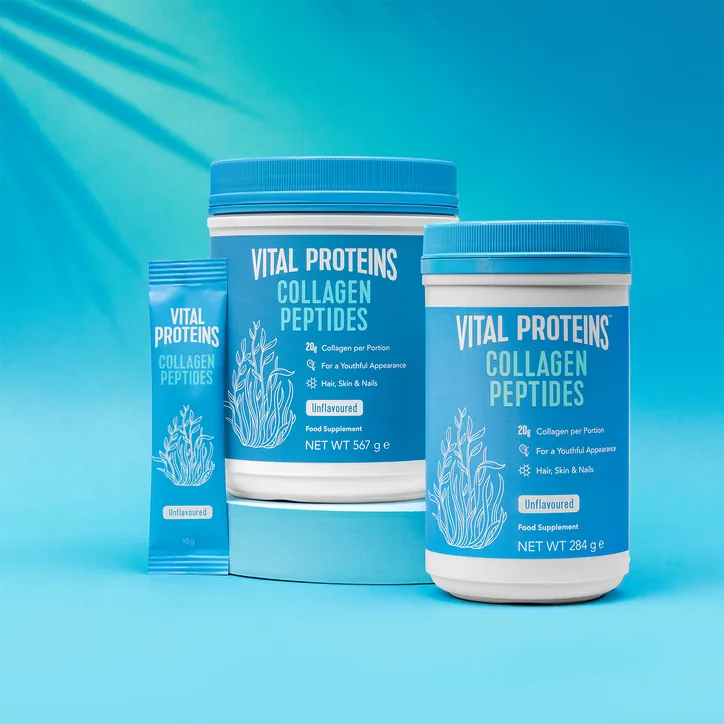
I started taking Vital Proteins Collagen Peptides in January 2026. I took it every morning, mixed into coffee, for ninety consecutive days. I bought three tubs in a row. The total spend was approximately AU$165.
I noticed: nothing.
This is, in fairness, partly my fault. My nails were already strong. My hair was already in good condition. My skin, at thirty-four, is the skin I have always had. The thing I was hoping collagen would change was, in retrospect, not actually a problem. I was, like a lot of women in their thirties, taking a wellness supplement because everyone in my feed was taking a wellness supplement.
The clinical evidence on oral collagen is genuine, but it is also narrower than the marketing implies. Studies show modest improvements in skin elasticity and joint pain in populations who actually have low collagen synthesis, typically older adults, people recovering from injury, and people with specific dietary deficiencies. For a healthy thirty-four-year-old eating adequate protein, the marginal benefit is small enough that I would not have noticed it had it occurred.
What did happen is that I added a daily ritual to my morning that I did not need. The cost was not just the AU$165, it was the small mental tax of remembering to scoop it, the slightly worse-tasting coffee, and the implicit message I was giving myself every morning that my body needed supplementing.
I switched, after the third tub, to Vida Glow's marine collagen, same evidence base, smaller daily dose, made in Australia, and AU$45 a tub instead of AU$55. If I had to pick a collagen for someone who has decided they want one, I would pick this one. But if you are healthy, eating well, and in your twenties or thirties, the most honest thing I can say is that you probably do not need either.
Wellness marketing is exceptionally good at convincing people who do not have a problem that they have a problem. Collagen is not the worst offender, there is reasonable evidence and the harm is mostly financial. But the broader pattern is one I see in this category constantly: well-formulated supplements sold at premium prices to people who would have been fine without them.
The honest test for any supplement is whether you can describe, specifically, what symptom you are trying to address. If you cannot, you do not need it.